New investigation exposes serious flaws in probe into Indonesian journalist's murder
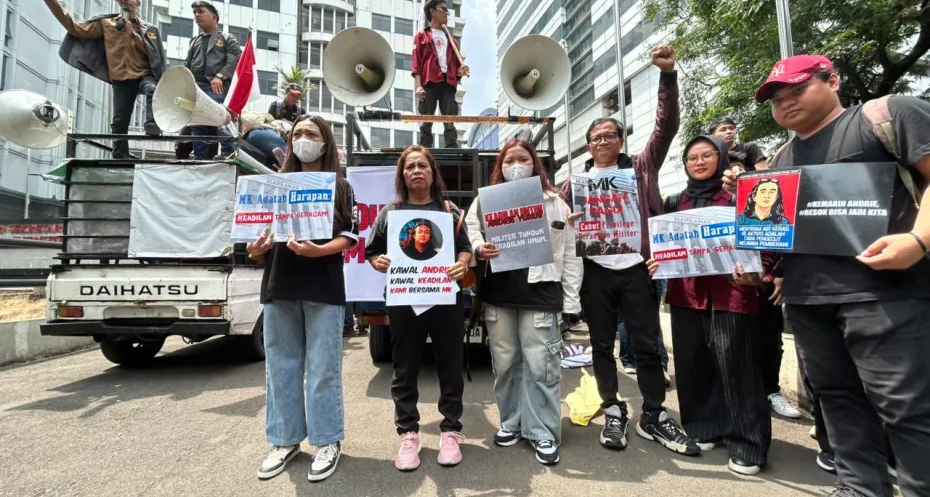
Two years after the murder of Indonesian journalist Rico Sempurna Pasaribu and three of his family members, Free Press Unlimited (FPU) and the Committee to Protect Journalists (CPJ) have uncovered serious shortcomings in the official investigation into the case.The findings raise new questions about the possible involvement of military personnel and the persistent impunity for crimes against journalists in Indonesia.
Pasaribu, a journalist with news outlet Tribrata TV, was killed alongside his wife, son, and grandson on 27 June 2024 when their home in Kabanjahe, North Sumatra, was set on fire. In the days leading up to the attack, he received threats and demands to remove articles he had published about an illegal gambling operation allegedly linked to Corporal Herman Bukit, a soldier in the Indonesian Army's 125th Battalion.
For the joint investigation, FPU and CPJ reviewed court documents, military investigation files and witness testimonies, and conducted interviews with individuals close to the case.
Key findings
The investigation found that Indonesian authorities failed to pursue several critical lines of inquiry.
- According to the report, there is substantial evidence linking Bukit to the illegal gambling operation that Pasaribu had reported on, to meetings with the main perpetrator, Bebas Ginting, and to pressure exerted on the journalist to remove his reporting. Despite this, Bukit was never questioned as a person of interest.
- The report also found that authorities failed to seriously investigate the threats Pasaribu received in relation to his journalism. The journalist had expressed concerns for his safety to friends, colleagues and a police officer, yet these warnings never became part of the official investigation.
- Investigators also neglected to use key investigative tools, including forensic analysis of cellphone communications and financial analysis of relationships between persons of interest in the case.
- Furthermore, the military investigation that cleared Bukit of involvement in the murders was found to be excessively narrow in scope, lacking transparency and containing significant inconsistencies. According to the report, military investigators disregarded important witness testimony and evidence.
“Two years ago, Rico Sempurna Pasaribu and his family were burned alive, and yet we are still waiting for all the answers”, said Jules Swinkels, senior researcher at Free Press Unlimited. “Indonesia’s military justice system ensures that any possible involvement of military personnel is not independently investigated. We urge the Indonesian authorities to move the case to a civilian court, where public transparency and accountability are more attainable than within the closed mechanism of the military justice system.”
Recommendations
FPU and CPJ call on the Indonesian National Police to reopen the investigation into the murder of Rico Sempurna Pasaribu and his family, with particular attention to the alleged involvement of Herman Bukit. The renewed investigation should make full use of available investigative methods, including digital and financial forensic analysis.
The organisations also urge the Indonesian authorities to ensure that any alleged involvement of military personnel is tried in a civilian court. According to FPU and CPJ, the current military justice system lacks sufficient guarantees of independence, transparency and accountability.
In addition, the organisations call on the Indonesian government to empower the Press Council and National Human Rights Commission to monitor law enforcement actions related to the case, reform the Military Justice Law, and strengthen protections that enable journalists to work safely.
Since 1992, fourteen journalists have been killed in Indonesia. In eight of the nine cases in which journalists were murdered in direct reprisal for their work, full justice has not been achieved. The case of Rico Sempurna Pasaribu underscores the urgent need to end impunity for crimes against journalists in Indonesia.
Read the full report.
Since 1992, 14 journalists have been killed in Indonesia, and eight of the nine cases in which journalists have been murdered in direct reprisal for their work remain unsolved. Impunity has become entrenched worldwide, with four out of five killers of journalists getting away with murder. If anyone is held accountable, it is usually those who are paid to do the job and rarely the masterminds.