Serbia: Total impunity entrenched 27 years after killing of editor Slavko Ćuruvija
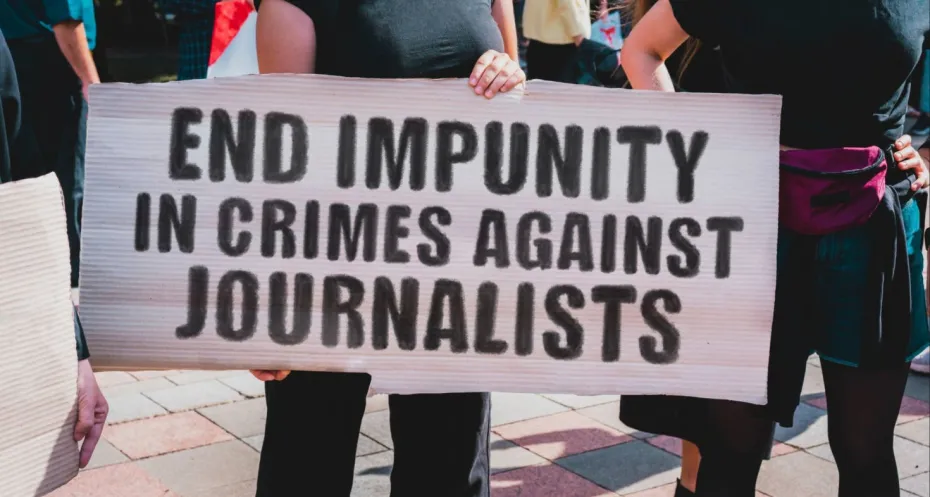
Twenty-seven years after the assassination of Serbian newspaper publisher and editor Slavko Ćuruvija in Belgrade, the undersigned media freedom organisations mark the upcoming anniversary of the killing by lamenting the complete impunity for those responsible for one of the most serious attacks on journalism in the country’s history.
Our organisations, which were part of a recent international media freedom mission to Serbia organised by the Council of Europe’s Platform for the Safety of Journalists and the Media Freedom Rapid Response (MFRR), have monitored the media freedom crisis in Serbia intensively in the past years.
Following our visit to Belgrade, we warn that the current climate for the safety of journalists is so dire that we fear another journalist could be seriously injured or even killed unless urgent measures are taken to stop the downward spiral of violence. We echo the concerns of United Nations High Commissioner for Human Rights Völker Türk who warned on 9 April against “the continued targeting of journalists and the growing pressure on independent media outlets” pointing “to a broader deterioration of the media environment”.
As we prepare to mark yet another grim anniversary on 11 April, our thoughts are with the family of Ćuruvija and their colleagues at the Slavko Ćuruvija Foundation, who continue the nearly three-decade fight for justice and accountability for the journalist’s murder.
Ćuruvija, a well-known critic of the Milošević regime, was gunned down outside his apartment building in central Belgrade on 11 April 1999, amidst the NATO bombing of Yugoslavia. In the days leading up to his killing, he was placed under surveillance by members of state security. The broad-daylight killing became one of the most emblematic cases of impunity for the killing of a journalist in the Balkans.
Twenty years later, in 2019 four former Serbian intelligence and security officers were finally found guilty of planning and carrying out the murder, securing a historic conviction. The combined 100-year prison sentences were upheld in 2021. However, following a retrial, in February 2024 the Belgrade Court of Appeal overturned the guilty verdicts and acquitted the four men.
In October 2025, the Supreme Court ruled that significant violations of the provisions of criminal procedure were made during the retrial, including the unfounded dismissal of key witness testimony. The Supreme Court decision was only revealed in January 2026. Although the ruling identified important violations of the law in the acquittal decision, no further appeals are possible under Serbian law.
The impunity for the killing of Ćuruvija, as well as for the murders of Dada Vujasinovic and Milan Pantic, stands out as a shocking example of the consistent failure of the criminal justice system to secure accountability for historic killings of journalists in Serbia, but also as a symbol of the wider breakdown of the rule of law in the country and the inability of authorities to protect journalists.
Despite a massive surge in the number of physical attacks, death threats and intimidation against journalists in the last year, ranking Serbia among the highest in Europe for such cases, in 2025 only three convictions were secured. This shocking statistic points to a wider breakdown in the systems for protecting journalists. It is also fuelled by hostile and irresponsible rhetoric against independent journalists from high-ranking government officials.
Following the mission on March 26-27, which was organised as part of the Council of Europe’s Platform for the Safety of Journalists and the Media freedom Rapid Response (MFRR), we warned that the current climate for the safety of journalists remains so toxic that the chances of further escalation in the severity of attacks against journalists are dangerously high. Since the mission, local elections saw yet another serious spike in violent attacks on journalists reporting from the streets.
On the anniversary of Ćuruvija’s murder, we again urge the Serbian state to uphold its responsibility to end the impunity for Curuvija’s murder. At the same time, the government must take concerted action to stop the cycle of violence against journalists in the country, lead by example in reducing tensions and hostility, and ensure journalist protection mechanisms are functioning properly. If authorities do not act, they will bear significant responsibility for any future attacks or killing of journalists.
In the coming weeks, our organisations will publish a post-mission report outlining recommendations for stopping this dramatic media freedom decline in Serbia, which will be provided to government officials as well as international bodies, such as the European Union, Council of Europe and the OSCE.
As the Slavko Ćuruvija Foundation continues its legal campaign for justice, in the face of defamation lawsuits from the now acquitted defendants, our organisations again underline our support for their decades-long fight for justice and all efforts to secure accountability for this crime. As we remember Ćuruvija, we remind that no journalist deserves to be threatened, silenced, attacked or killed for doing their job of questioning and holding power to account.
Signed:
ARTICLE 19 Europe
Association of European Journalists
Committee to Protect Journalists (CPJ)
European Centre for Press and Media Freedom (ECPMF)
European Federation of Journalists (EFJ)
Free Press Unlimited (FPU)
Index on Censorship
International Press Institute (IPI)
Osservatorio Balcani Caucaso Transeuropa (OBCT)
Reporters Without Borders (RSF)