A guide to trauma-sensitive reporting for journalists in the MENA region
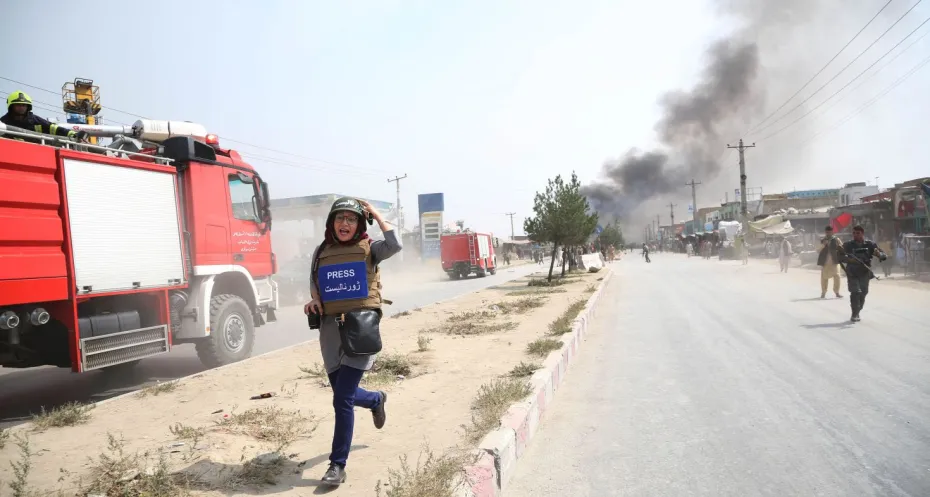
Journalists globally, especially in the Middle East and North Africa (MENA), are not only reporting on trauma; many are living through it. From conflict and corruption to gender-based violence (GBV), exposure to distress is a daily reality. Yet mental health support in newsrooms remains rare, and the psychological toll is often treated as normal. The feeling of being unprotected is frequently dismissed as simply ‘part of the job,’ fueling a long-standing culture of silence. However, in December 2025, this silence was broken at the ARIJ 18th Annual Forum in Amman, Jordan.
Bridging journalism and psychology
Free Press Unlimited launched the Trauma-Sensitive Reporting Masterclass, bringing together journalists, editors and mental health professionals. The programme was co-created by media expert Rouba El Helou and clinical psychologists Aya Mhanna and Dr. Khaled Nasser.
The goal was practical: To equip journalists with tools to report on trauma ethically, while protecting both their sources and themselves.
During development of this Masterclass, the team identified a major gap: there were no specialised Arabic-language learning materials tailored to the realities of the region. In response, a new guide was developed: Trauma‑Sensitive Reporting: The Basics of Understanding Trauma‑Informed Journalism.
This first-of-its-kind English and Arabic resource offers practical, culturally grounded guidance - not abstract theory - for covering trauma responsibly.
Why this matters
The Masterclass and the guide go beyond theory, turning awareness of trauma into practical support for journalists in the MENA region.
- The Masterclass created a safe space for reporters to break the long-standing taboos around work-related mental health. By framing trauma awareness as a professional skill rather than a personal burden, it gave journalists practical tools to handle stressful situations and opened up conversations that were long avoided.
- The initiative addressed a critical gap. A survey conducted before the Masterclass showed that MENA reporters often work without institutional support. 100% of senior journalists requested resilience strategies, and 75% asked for concrete newsroom policies to better protect themselves and their teams.
- By bringing together senior journalists, editors, and mental health experts in one room, the Masterclass established a Community of Practice (CoP) in the region. This network allows professionals to share experiences, discuss ethical standards, and support each other, breaking the cycle of isolation and giving journalists ongoing guidance beyond the training.
Participants reflected on these outcomes and shared how the Masterclass reshaped their professional perspectives:
Ragheb Shraim, Manager at Fawasel for Civil Society Development:
“I believe that the rights of individuals and considering the future impact of press coverage on them is more important than getting a scoop. Grieving people might speak out during the shock. However, the impact of this coverage after they recover can be very negative and may become a stigma in their lives.”
Safaa Al-Ramahi, journalist:
“Mental health for field journalists is often reduced to a luxury rather than a professional necessity. The priority is given to the ‘scoop’ at the expense of humanitarian considerations.”
What the guide delivers
The curriculum focuses on three core areas:
- The Informed Interview: How to interview survivors without causing further harm
- Journalist Safety: Recognising and managing personal exposure to trauma
- Professional Practice: Building newsroom standards that prioritise dignity and consent
At the heart of the training is a simple shift: Ethical reporting is not about choosing between truth and humanity. It is about protecting both.
Participants repeatedly highlighted the same challenge: the pressure to be first can come at a high human cost. Hasty reporting can stigmatise grieving individuals long after the cameras leave. Consent given under shock or newsroom pressure may not be truly informed. And journalists themselves often internalise the suffering they cover. The masterclass and guide reframe trauma awareness as a professional skill, not a personal weakness.
Participant from Egypt (editor)
“This training made me reconsider the idea that information is the most important thing above all else. Journalists may give consent under pressure. That consent may not always be conscious.”
The aim is clear: move away from sensationalism and towards a sustainable model where accuracy and empathy are inseparable. Trauma-informed journalism recognises that:
- Speed should not override dignity
- Visual impact should not re-traumatise
- Reporting the truth does not require amplifying pain
Voices from the community
Participants of the Masterclass described the ethical and personal dilemmas they face when reporting on trauma:
Saad Matar, Program Director at AnaHon Media Platform:
“Telling the truth does not require amplifying pain. Ethical reporting is not about choosing between facts and humanity, but protecting both at the same time.”
Marah Zyada, media creator and producer:
“In conflict coverage, the line between revealing reality and protecting human dignity is fine. Dealing with it requires constant ethical awareness.”
Valentine Nesser, Executive Director of Silat Wassel:
“The word can be a testimony, or it can be a wound if not written with awareness and responsibility.”
Yazan Abu Al Rous, Director of Hazal Jad:
“Journalists constantly balance urgency with responsibility, ensuring speed and visuals do not strip people of their dignity.”
Osama Issa, Founder and General Manager of ShezoMedia:
“When we cover human rights cases involving abuse or killing, I find it difficult to detach myself from the story. I dissolve into it and become part of the suffering.”
Access the guide
The guide Trauma-Sensitive Reporting is available as an Open Educational Resource (OER) in two languages. They provide practical guidance and a clear “do no harm” roadmap for newsrooms, journalism schools and freelance reporters.
Download the guide