Independent journalists crucial for the elections and democratic future of Hungary
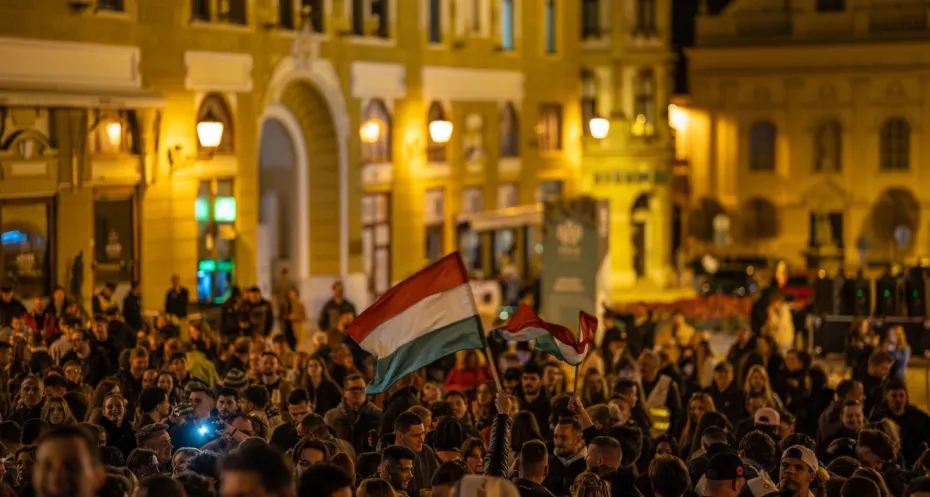
The recent election results in Hungary show that, after sixteen years of the erosion of democracy under Prime Minister Viktor Orbán’s authoritarian rule, the tide has been turned. Péter Magyar’s election victory, with a two-thirds majority, offers a promising opportunity to restore Hungary’s severely curtailed press freedom. Persistent independent journalists played a crucial role in this historic change. They are preparing for a changing media landscape now that Magyar has announced plans to restore the media’s central role in Hungary’s democratic future.
On the Reporters Without Borders (RSF) Press Freedom Index, Hungary ranked 26th in 2009, the year before Orbán took office. Last year, the country had slipped to 68th place. Since taking office, Orbán has systematically curtailed press freedom in Hungary. Critical journalists became the targets of intimidation, exclusion, and targeted smear campaigns. In addition, pro-Russian propaganda, including undifferentiated war rhetoric about Ukraine, was given free rein. Over the years, Orbán’s heavy-handed policies became a playbook that inspired other authoritarian leaders worldwide.
The role of independent media during the elections
Orbán presented himself in state media as the savior of the Hungarian people, explains Hungarian journalist András Földes. He works for the independent outlet Telex, formerly known as Index. “Orbán’s strategy was to portray external actors as existential threats: according to Orbán, migrants undermine Hungarian culture; the war in Ukraine could also drag Hungary into a deadly conflict; and figures like philanthropist George Soros and institutions like the European Union weaken Hungarian sovereignty.”
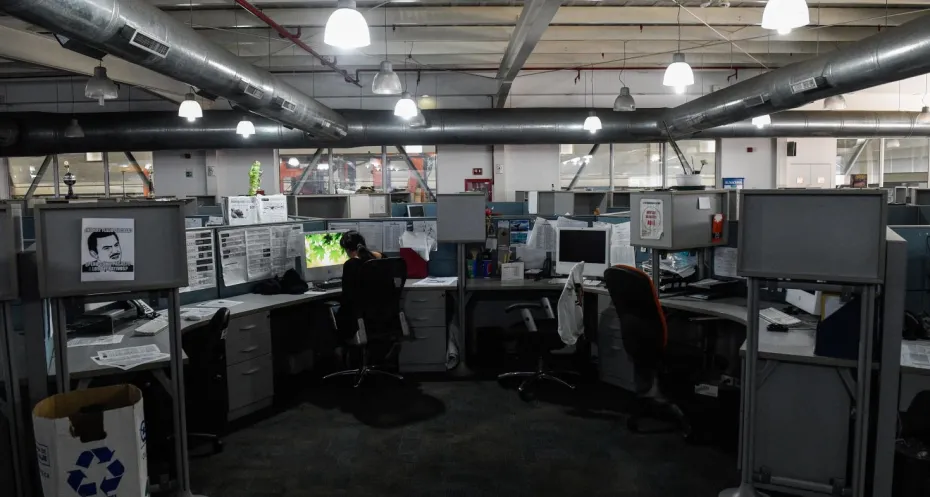
Index, too, was intimidated by the government for years. When the organization was taken over by a businessman in 2020, eighty staff members resigned in protest. An event he documented in the film 80 Angry Journalists.
According to Földes, Orbán’s state propaganda played a role in his own downfall. “When citizens hear for sixteen years that danger is at the door, and it just doesn’t come, the state media becomes less and less credible.” According to Földes, citizens therefore sought out alternative sources of information.
The independent media still active in Hungary managed to hold their ground despite the severe repression. While traditional media were dominated by pro-Fidesz coverage, they offered a counterbalance with independent analyses, live debates, and exposés on corruption and abuse of power, including scandals. Such as the president granting a pardon to a man who had committed child abuse in a state-run children’s home, or the sharing of sensitive EU information with Russia. “This became a snowball effect,” says journalist Földes. Independent reporting on scandals was picked up by politicians and activists. “The government no longer dictated the narrative but had to defend itself and be held accountable. Journalists regained their power to hold the government to account.”
He acknowledges that this also brought journalistic dilemmas, because Hungarians still primarily view the media as a political tool. “But independent journalists aren’t there to bring down a government, but to report factual information.”
The YouTube channel Partizán managed to circumvent state control via social media. Magyar himself, who had been systematically barred from public broadcasting, had been allowed to join the channel since 2024. On election night, Partizán’s live broadcast was watched by massive numbers of opposition supporters. Among them were many young people, who turned out in large numbers to vote, contributing to Hungary’s record voter turnout of 77.8%.
Magyar’s Promises
It is encouraging that Magyar has already announced concrete plans to restore press freedom. For instance, he says he wants to temporarily shut down public broadcasting until its independence is guaranteed, and he intends to introduce a new media law. “Every Hungarian deserves a public broadcaster that broadcasts the truth,” said the new prime minister. He also promises to establish an independent media regulator and distribute state advertising more fairly.
Yet there is also criticism of Magyar’s own treatment of journalists. During his first interviews with state media, he openly accused reporters of spreading lies and propaganda, and compared their reporting to that of North Korea and Nazi Germany.
His tough stance on state media is understandable given their role as a propaganda machine under Orbán. But if he truly wants to promote press freedom, he will have to invest in an independent and pluralistic media landscape, and his government itself will also have to set an example by treating critical journalists with respect.
The Future
Földes and his fellow journalists are preparing for this future pluralistic media landscape. The discussion also touches on revenue streams. During Orban’s tenure, citizens were eager to donate to support reliable and independent journalism. Will that change now? On the other hand, independent media may in the future be eligible for subsidies that previously went only to pro-government media. Moreover, it remains to be seen whether media companies controlled by oligarchs will survive, partly because they were largely financed with corrupt funds.
However, sixteen years of systematic erosion of press freedom cannot be reversed overnight. Other examples, like Poland, show that political resistance and deep-rooted legal obstacles can slow down reforms. Furthermore, the severely eroded trust of Hungarian citizens in the media — which now stands at just 22 percent — will need to be restored.
Nevertheless, Magyar’s large parliamentary majority offers a unique opportunity to improve the journalistic climate and protect it for the future. Through the Media Freedom Rapid Response partnership, Free Press Unlimited made a number of recommendations to the Hungarian government to ensure the long-term sustainability of press freedom.