Safety of journalists

Recent crises illustrate the dangers journalists face daily.

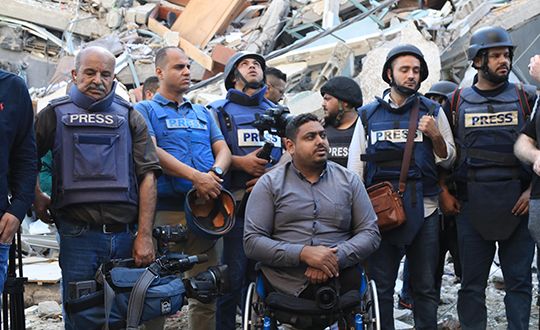
Gaza: The conflict has led to an extraordinary number of journalist casualties, targeted attacks on media infrastructure, and a near-total collapse of safe working conditions. In this context, local journalists are often the only source of credible information for both local communities and the international public. 

Sudan: Since the outbreak of war, journalists have been threatened, detained, displaced, and systematically silenced. Many have fled and are now reporting from exile, while those who remain face severe shortages of equipment, electricity, and connectivity. 

Ukraine: Journalists covering the full-scale war work close to frontlines, exposing themselves to bombardments, digital attacks, disinformation campaigns, and psychological trauma.

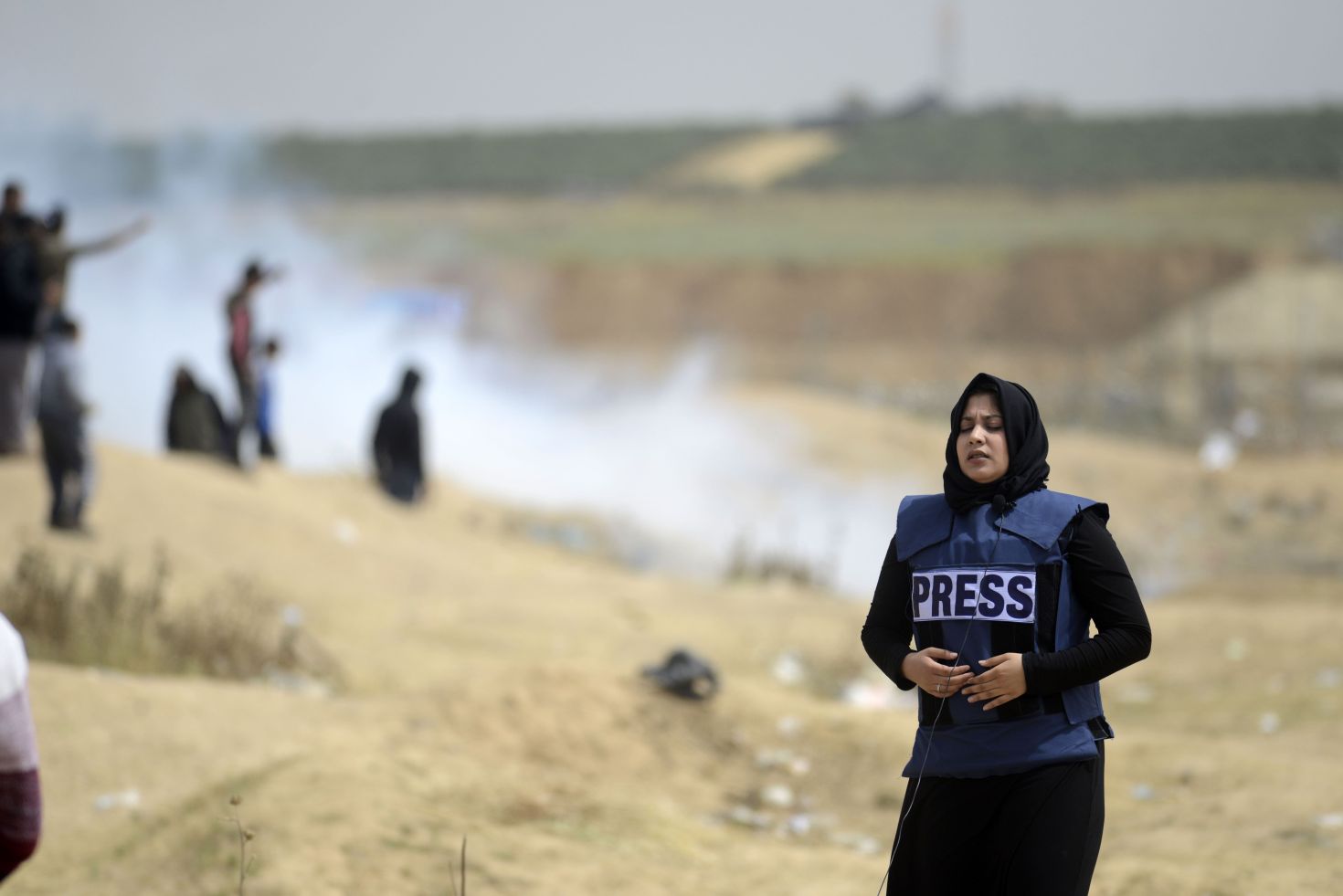
A Palestinian journalist covers the war in Gaza.
A Palestinian journalist covers the war in Gaza. Credit: Mohammed Zaanoun.


What we do

At Free Press Unlimited, we strengthen the safety and resilience of journalists through a holistic approach, built across three levels. Recognising that security is constantly evolving, we continuously adapt our tools, protocols and partnerships to anticipate and respond to emerging threats.

  • Prevention and preparedness focus on reducing risks and strengthening journalists’ resilience before harm occurs. We support journalists to better anticipate threats through safety advice, protective equipment, and digital security training. For example, through Totem, our online learning platform, journalists access free courses on digital security and safety to better prepare for work in high-risk contexts. We also advocate for stronger legal protections, encouraging decision-makers worldwide to prioritise press freedom safeguards.

  • Protection comes into play when prevention fails. We provide rapid and practical assistance through our emergency fund Reporters Respond to journalists facing threats, attacks, legal harassment or forced displacement. This support helps journalists continue their work as safely as possible, including through emergency and financial assistance, legal support and temporary relocation when needed.

  • Prosecution aims to counter impunity for crimes against journalists. We work to strengthen accountability by investigating and documenting violations, supporting legal follow-up and advocating for justice. Through initiatives such as A Safer World For The Truth, we help reopen and investigate cold cases of murdered journalists.


Reporters Respond

Much of our safety support is delivered through Reporters Respond, our emergency fund for journalists in distress. Through Reporters Respond we provide direct grants, guidance, and support to journalists facing immediate threats, harassment or crisis situations. In 2025, over 1,100 media professionals received assistance, including legal support, safety equipment, and relocation when necessary.

More about Reporters Respond


Psycho-social support

Psycho-social support is an essential element across all levels of our safety work. Journalists regularly work under extreme pressure, exposed to trauma, stress and burnout. We integrate mental health support into our programmes through emergency care, peer-support networks, workshops and recovery spaces. Particular attention is given to journalists working in high-stress environments and to women journalists.


Examples of our work

Psychosocial support of Afghan women journalist in exile

Relentless repression by the Taliban forced Afghan women journalists to leave the country. 25-30 of them received psychosocial support. This initiative reinforced the resilience, safety, and sustained engagement of women journalists operating in exile.

Strengthening mental health and resilience of newsroom in Greece

Investigative newsroom Solomon in Greece faces intense pressures that can often lead to burnout. In addition, legal and digital threats related to their reporting have further heightened the strain. With the support of FPU mental health and resilience within its staff is strengthened, shifting from ad hoc responses to a preventive, systems-based approach. As a result staff turnover reduced, editorial collaboration strengthened, and decision-making in high-risk or high-stress reporting environments improved.


Networks and collaboration

We work closely with international and regional networks dedicated to the media in conflict areas. Through these networks, we coordinate rapid responses, share information and expertise, and strengthen collective protection mechanisms. Key networks include the Journalists in Distress Network, the Media Freedom Rapid Response consortium, the Legal Network for Journalists at Risk, and the Building Responses Together network. Our broader partnerships extend across all our thematic programmes.

See a full overview of our partners.


Access to independent information as overarching principle

While each of the core programmes has its own focus, they are deeply interconnected and reinforce one another. Safety of Journalists cannot be achieved without attention to Media in Conflict and Innovation & Information Integrity. Underpinning all three themes is FPU’s overarching principle of access to independent information, the foundation upon which press freedom and democratic accountability rest. Together, these themes form the backbone of Free Press Unlimited’s strategy to protect press freedom, strengthen reliable information ecosystems, and build a more resilient global media landscape.

Share this page:

I want to stay up to date

I want to stay up to date!

activity_privacy_policy
I have read and approve the Free Press Unlimited Privacy Policy