8 questions to ask before you believe or share news about conflicts
When war or conflict dominates the news, how do you know what to believe? Different parties have strong political and/or ideological interests in how events are understood and reported. Governments deliberately spread propaganda. Social media allow claims to reach millions of people before they have been verified. Commentators and opinion writers bring their own political views and assumptions to the story.
Sometimes this is deliberate. Often it is not. This does not mean all reporting is unreliable or that every perspective is equally valid. It means that news from conflict zones requires extra care. Here are eight questions to ask before you believe or share information about a conflict.
Who is telling you this?
Start with the source. Is the information coming from an independent journalist, a news organisation, a government, a military, a political organisation, an activist, an expert or an anonymous social media account? Different sources have different interests and access to information. A government statement about its own military operation is a source of information, but it is not independent verification.
Ask yourself: Who is speaking? What do they know? And what interest might they have in telling this particular story?
Is this news, analysis or opinion?
Not everything you read in the media is news reporting. News reporting should tell you what is known, how the information was obtained and what remains uncertain. Analysis interprets events and puts them into context. Opinion pieces and columns express a particular point of view.
Opinion has an important place in public debate. But every perspective also comes with its own assumptions and blind spots. A columnist with a strong ideological position might emphasise certain facts while giving less attention to others. This does not necessarily mean they are deliberately misleading you.
So ask yourself: Am I reading a verified report of what happened, an analysis of those events, or someone's opinion about them?
Who benefits if you believe this?
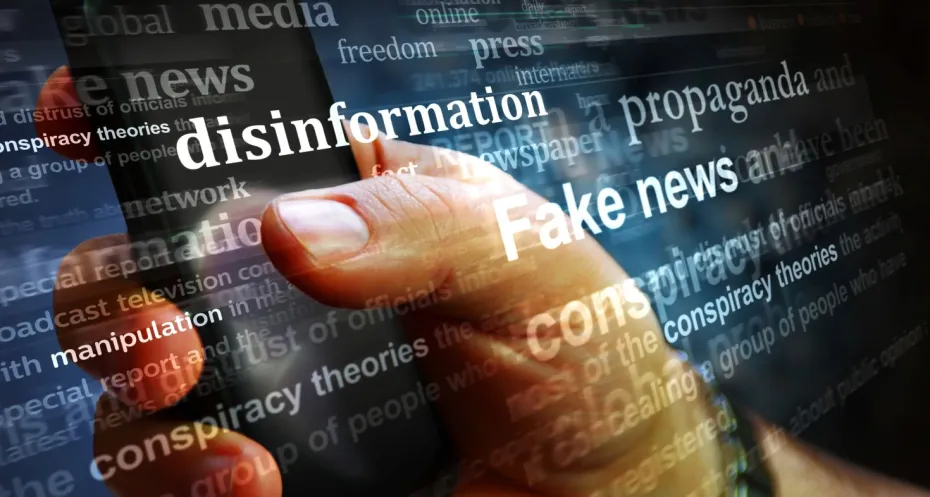
Information is no longer simply something we consume. It has become a tool of power. Governments, political actors and other powerful groups use information to shape public opinion, influence behaviour and control how conflicts are understood. They use it to justify military action, build support, undermine opponents and discredit journalists. We increasingly speak of information warfare because the battle for influence is also a battle over what people see, believe and share.
These efforts are often organised on a large scale. States and other actors invest significant resources in propaganda campaigns, fake accounts, bots and troll networks designed to amplify particular narratives and reach as many people as possible. What starts as a coordinated influence campaign can eventually appear in the feeds, conversations and news consumption of ordinary people. That is why it’s always good to ask yourself: Who benefits if people believe this story?
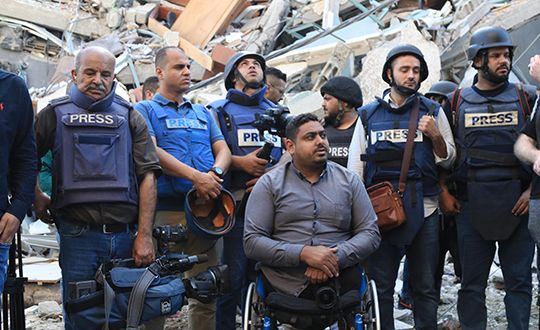
Free Press Unlimited has also investigated coordinated campaigns targeting Palestinian journalists and undermining their credibility. [Read our report on the delegitimisation of Palestinian journalists.]
Where does the information come from?
A claim repeated by ten accounts is not necessarily based on ten independent sources. Try to find the original source. If several news organisations report the same claim, check whether they obtained the information independently or whether they all cite the same government statement, social media post or anonymous source.
During a rapidly developing conflict, information often gets repeated faster than it gets verified.
Has the claim been independently verified?
Look for evidence beyond the original claim. Ask:
- Are multiple independent sources reporting the same thing?
- Have journalists spoken to people at the location?
- Is there photographic or video evidence?
- Has the location been verified?
- Have experts assessed the available evidence?
- Does the reporting distinguish confirmed information from allegations?
Responsible journalists also tell you when something has not yet been independently verified. Unconfirmed does not mean false. It means there is not yet enough evidence to treat the claim as an established fact.
Are images or videos really what they claim to be?
Images and videos have enormous power. They also provide fertile ground for manipulation. An image might be old, taken somewhere else, from a different conflict, digitally manipulated or genuine but presented without its original context. Before sharing an image or video, check where it first appeared. Look at the date, location and original context.
Our guide to spotting fake news includes tools that help you verify images and videos.
How does the information make you feel?
Does a post make you immediately angry, frightened or outraged? Strong emotions do not mean something is false. But emotional reactions can make us less likely to stop and check. Propaganda often works by appealing to emotions such as fear, anger or outrage.
If something triggers a strong reaction, pause before share something.
What is missing?
Bias is not only about what someone says. It can also be about what they leave out. Ask:
- Which voices are included?
- Which relevant voices are missing?
- Are people directly affected by the conflict represented?
- Is relevant political or historical context provided?
- Are allegations clearly distinguished from established facts?
No single article can include every perspective. But noticing what is missing helps you understand how information is framed.
These questions are based on core principles of responsible journalism, including source verification, distinguishing facts from opinion, providing context and being transparent about what is known and what is not. They reflect principles set out in the Global Charter of Ethics for Journalists.
What about mainstream media?
Independent and mainstream news organisations are not immune to mistakes or incomplete reporting. Conflict reporting is particularly difficult. Journalists might have limited access to the area, rely on sources with their own interests or have to report rapidly as events unfold. An unverified claim might sometimes enter the news cycle before journalists have enough information to establish what happened. This is different from deliberately spreading fake news.
Professional journalism has standards designed to deal with uncertainty. Journalists should verify information, identify sources, distinguish fact from allegation, correct errors and update stories when new information becomes available. The question is therefore not simply: “Which side should I believe?” Ask instead: “How was this information established?”
Why independent journalism matters
In a conflict, information itself becomes contested. Governments and other powerful actors have the resources to shape narratives and spread propaganda. Social media allow claims to reach millions of people within minutes.
Independent journalists provide an essential counterweight. They investigate claims, verify information, question those in power and report what they find. This is why independent media are also a matter of security and resilience. As Free Press Unlimited director Ruth Kronenburg argues, independent journalism helps societies withstand propaganda and information warfare.
Free Press Unlimited supports journalists and independent media who do this work, often under difficult and dangerous circumstances. Because people need more than information. They need access to information they can trust.