Legacy media amplified unsubstantiated allegations about Palestinian journalists
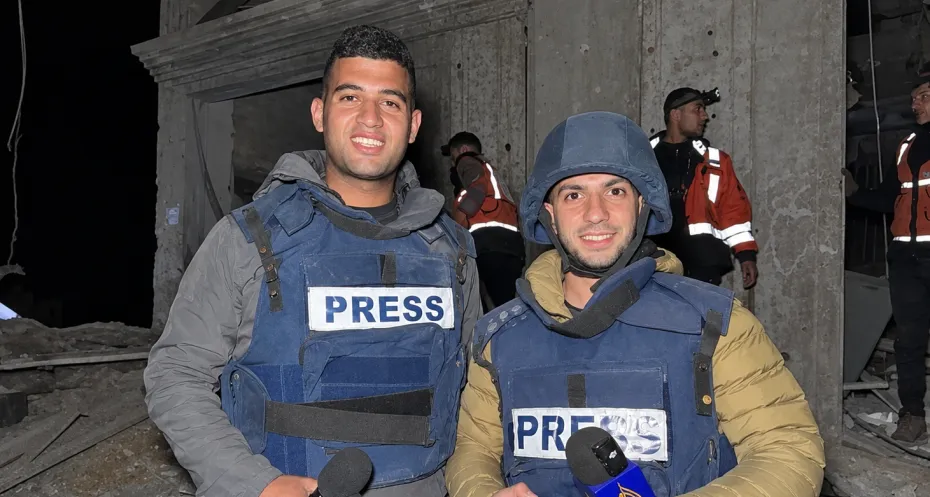
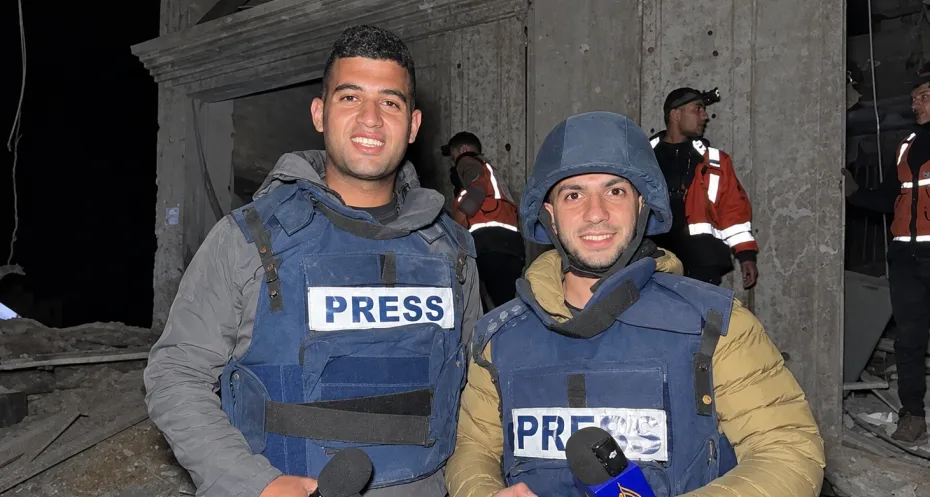
A network of actors within and outside the Israeli government systematically spreads unsubstantiated allegations of terrorism against Palestinian journalists in order to legitimise Israeli attacks on them. We have mapped out this network in our latest investigation and found that western legacy media frequently reproduced these delegitimisation narratives without consistently applying fundamental journalistic safeguards.
The new report How online delegitimisation narratives targeting Palestinian journalists were constructed and reproduced chronologically maps out how this disinformation was able to gain increasing traction. We investigated two specific cases that are emblematic of this dynamic – those of the Palestinian journalists Anas Al-Sharif and Hossam Shabat – to specifically examine how these allegations arise and spread, and identified 269 social media posts from 32 individuals and organisations.
The report shows that actors outside the Israeli government exchanged information with the IDF regarding the two journalists and, in some cases, even had paid collaborations with Israeli ministries. As international media were barred from entering Gaza, Al-Sharif and Shabat played a vital role in bringing these events to light through their reporting. It also emerged that the delegitimisation of the two journalists intensified at times of significant international criticism of Israel, such as during the famine in Gaza in the summer of 2025. As international media were barred from entering Gaza, Al-Sharif and Shabat played a vital role in bringing these events to light through their reporting.
Download the full investigation report
Murder of journalists
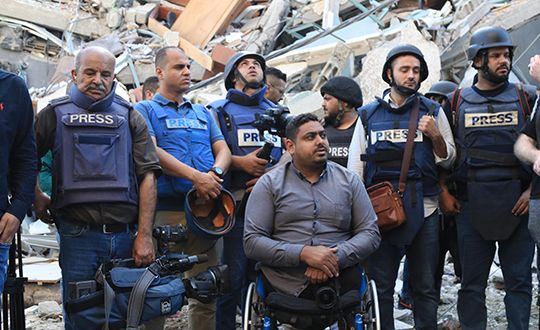
The two journalists were among the most prominent Palestinian journalists reporting from Gaza.
Israel killed Hossam Shabat in March 2025 and Anas Al-Sharif in August 2025. Even before
their deaths, they were labelled terrorists by the IDF; however, the FPU concludes that no
credible evidence was provided to support these allegations, not even after various countries
and institutions pressed for it.
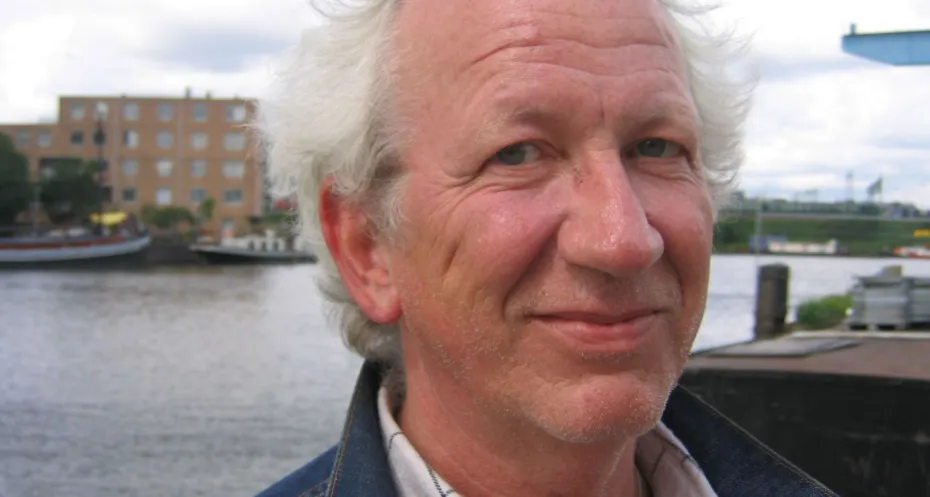
"The analysis clearly demonstrates that the information put forward by Israel and other sources does not provide conclusive evidence for the conclusion that Hossam Shabat and Anas Al-Sharif were directly participating in hostilities at the time they were killed, when the ICRC’s [International Committee of the Red Cross] interpretation is applied,’ said Marten Zwanenburg, professor of military law at the University of Amsterdam. “Even if the broader interpretation of direct participation in hostilities applied by Israel is used, the information that has been made public does not provide conclusive evidence that this threshold was met in the cases of Hossam Shabat and Anas Al-Sharif.”
Unsubstantiated allegations
These unsubstantiated allegations also found their way into the international media. Forinstance, the day after Al-Sharif’s murder, the German newspaper Bild ran the headline: “The murdered journalist is said to have been a terrorist.” To understand how these allegations were able to reach a wider audience and gain credibility, Free Press Unlimited examined coverage of these two journalists from 14 mainstream media outlets in seven Western countries: the BBC (UK), The Sun (UK), NOS (Netherlands), De Telegraaf (Netherlands), Le Figaro (France), Le Parisien (France), Tagesschau (Germany), Bild (Germany), The New York Times (US), Fox News (US), CBC News (Canada), TVA Nouvelle (Canada), News.com.au (Australia), The Australian (Australia).
Journalistic breaches
More than 80 per cent of the publications analysed contained at least one breach of the international code of journalistic conduct (the Bordeaux Code). Most strikingly, in 72 per cent of the publications, no attempts were made to independently verify the allegations, despite their seriousness. Almost a quarter did not offer the journalists or their employers the right of reply, despite the fact that public statements were available in many cases. Of the media organisations examined, NOS had the fewest deviations from the Bordeaux Code and therefore fared best in the study. All the media organisations involved were invited to a follow-up interview about the results; only De Telegraaf and NOS accepted the invitation.
From delegitimisation to the general public
Taken together, the findings suggest that delegitimisation narratives developed in online information environments can migrate into legacy media when established journalistic safeguards are not consistently applied. In cases involving targeted attacks against journalists, these dynamics have significant implications for public understanding, legal accountability and
the protection of journalists under international humanitarian law. This is also relevant for other contexts where journalists are being targeted as terrorists, like in Turkey, the Philippines and Russia.
Explore the investigation
How did the network operate? Who was involved, and how did the allegations reach international news media? Explore our campaign page for the full investigation, key findings, recommendations and responses from the parties involved.