Political pressure and digital threats are reshaping media freedom in Europe
New MFRR analysis reveals how state actors, online attacks, protest-related violence and “foreign agent” narratives have become increasing threats to journalism across Europe.
Over the past six years, the landscape for independent journalism in Europe has changed dramatically. New analysis by the Media Freedom Rapid Response (MFRR), which Free Press Unlimited is part of, based on data from the Mapping Media Freedom (MapMF) platform, shows how threats against journalists are increasingly driven by political actors, shifting into the digital sphere and fuelled by growing hostility towards independent media.
Since 2020, the platform has documented 6,092 press freedom violations affecting more than 10,200 journalists, media workers and media-related entities across EU Member States and candidate countries. The Mapping Media Freedom platform has become the largest public database tracking press freedom violations in Europe and continues to play a key role in monitoring, advocacy and rapid response efforts.
The findings reveal several major trends that now define the media freedom landscape in Europe.
1. State and political actors are increasingly driving attacks against the media
One concering finding is the growing role of state and political actors in press freedom violations. According to the analysis, state-related and political actors were responsible for around 40% of all documented violations over the six-year period. The share of violations linked specifically to political actors also increased steadily, rising from 14% in 2020 to 20% in 2025.
These attacks range from intimidation and smear campaigns to legal threats, arrests, surveillance and restrictions on reporting. Much of the hostility takes place through public rhetoric by political and state actors aimed at discrediting journalists and undermining trust in independent media.
Such rhetoric can incite and legitimize a broader erosion of democratic norms and growing political intolerance towards critical reporting across Europe.
2. The digital sphere has become the primary battleground
The monitoring also shows how press freedom violations are increasingly taking place online.
Digital attacks now represent one of the fastest-growing categories of threats facing journalists and media organisations. Over the past six years, the MFRR documented:
- online harassment and intimidation campaigns,
- spyware surveillance targeting journalists,
- spoofing and fake websites,
- and the growing use of AI-generated deepfakes and manipulated content.
Women journalists in particular are disproportionately targeted by online abuse and coordinated harassment campaigns.
The analysis highlights how technological developments, especially the quick rise of artificial intelligence, are providing new ways of attacking journalists and to block access to independent information.
3. Reporting from demonstrations remains highly dangerous
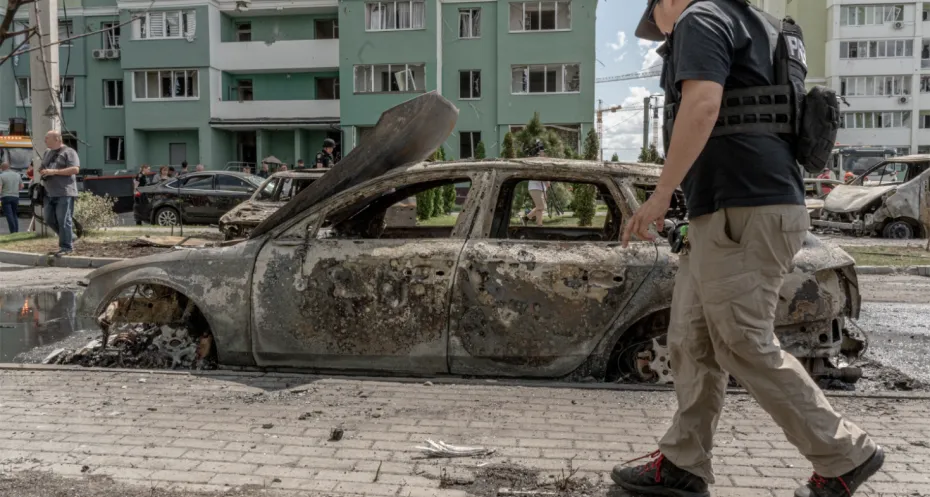
Beyond the digital sphere, demonstrations and public protests continue to be one of the most dangerous environments for journalists in Europe. The platform recorded 1,062 violations linked to protests and demonstrations, affecting more than 1,800 journalists and media professionals.
These incidents included physical attacks, arbitrary detention, confiscation of equipment, obstruction of reporting and violence by both police and private individuals. It shows that repression of media freedom increases when political tensions rise, including in the context of protests related to elections. This correlation is highly concerning, because protests are a critical means of democratic control by citizens. The findings underscore the urgent need for stronger protection mechanisms for journalists covering protests and other high-risk public events.
4. “Foreign agent” laws are emerging as a major threat
The data also reveals the emergence and spread of so-called “foreign agent” laws and narratives across Europe, most prominently in EU candidate countries.
Originally associated primarily with authoritarian contexts outside the EU, these laws and narratives are increasingly appearing within Europe itself. Since 2024 especially, the MFRR has documented a rise in attempts to criminalize and financially undermine independent media and civil society organisations through accusations linked to foreign funding or foreign influence.
In total, the platform recorded 181 alerts related to foreign agent laws or narratives, affecting 313 journalists and media entities. The growing use of these narratives risks further undermining independent journalism by framing critical reporting as illegitimate or politically suspect.
A changing threat landscape for journalism in Europe
Alongside these trends, the MFRR also documented:
- 27 journalists and media workers killed in connection with their work,
- 1,180 physical attacks,
- more than 2,000 verbal attacks,
- hundreds of arrests, lawsuits and restrictive legislative initiatives targeting the media.
Together, the findings show how threats to journalism in Europe are becoming more systemic, politically driven and technologically sophisticated.
Download a factsheet of the most important facts and figures here
Explore all Mapping Media Freedom data here.
The Media Freedom Rapid Response (MFRR) is a Europe-wide mechanism that tracks, monitors and responds to violations of press and media freedom in EU Member States and candidate countries. The project is co-funded by the European Commission and coordinated by Free Press Unlimited, the European Centre for Press and Media Freedom (ECPMF), the European Federation of Journalists (EFJ) and the International Press Institute (IPI).