Protecting women journalists protects press freedom
On International Women’s Day, Free Press Unlimited celebrates women journalists who risk it all to bring us the truth. Across the world, women journalists are documenting conflicts, exposing injustice and bringing forward stories that would otherwise remain unheard.
Yet in many parts of the world, doing this work comes with disproportionate risks. Women journalists face harassment, intimidation and violence simply for doing their job. Supporting their safety is therefore not only about protecting individuals. It is about protecting press freedom itself.
Gendered threats aimed at silencing women journalists
Violence against journalists is a global problem. But women journalists face a particular form of attack: gender-based harassment that targets them not only because of their work, but as women.
Online abuse has become one of the most widespread threats. Research shows that 3 in 4 women journalists have experienced online violence while performing their jobs in 2025. Women journalists also frequently face misogynistic insults, coordinated harassment campaigns, sexualised threats and attempts to discredit their work. 42% of women journalists have experienced offline attacks connected to online abuse, more than double the incidence rate recorded in 2020.
The impact goes far beyond individual harm. Online violence often causes severe psychological stress, feelings of isolation and pressure to withdraw from public debate. One in three women journalists has considered leaving the profession because of online violence (2020). When women are pushed out of journalism in this way, the public loses vital perspectives and essential stories remain untold. Violence against women journalists is therefore more than a personal attack. It is a form of censorship.
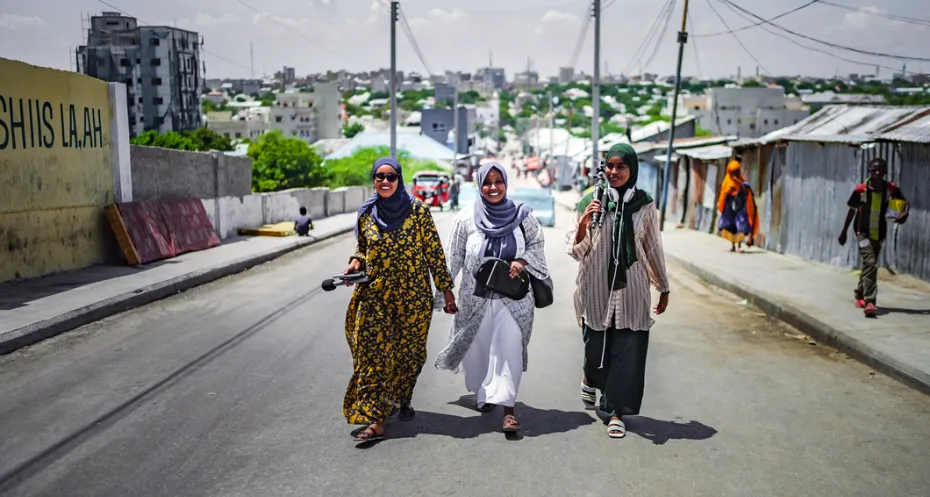
A recent example of the importance of women journalism comes from Somaliland, where journalist Fatima Mohamed produced a video report on gender-based violence in displacement camps. Across the Horn of Africa, prolonged drought has forced thousands of families from their homes, creating conditions in which insecurity and violence often increase.
By approaching the story with care and building trust with local organisations, Fatima created space for survivors to share their experiences. Her reporting shows how diverse voices in journalism strengthen coverage, not only by bringing new perspectives, but also by helping journalists connect with communities whose stories are rarely heard.
FPU supports women journalists to work safely
Creating safer conditions for women journalists requires both immediate support and long-term structural change. Free Press Unlimited works with journalists (like the above mentioned Fatima Mohamed), media organisations and partners around the world to strengthen safety mechanisms and build more inclusive media environments.
Through the Reporters Respond Fund, Free Press Unlimited provides emergency assistance to women journalists who come under attack. This support can include legal assistance, safety advice and psychosocial support to help journalists cope with the psychological impact of threats and harassment.
Another example is Afghanistan, where women journalists have faced severe repression since the Taliban returned to power. Free Press Unlimited partnered with Zan Times and Third Space Practice to support Afghan women journalists in exile. Through a series of online workshops, participants received practical tools to manage stress and trauma related to conflict reporting. The programme combined breathing techniques, grounding exercises and peer support, creating a safe digital space where journalists could share experiences and strengthen solidarity across borders.
In Kenya, Free Press Unlimited supported the Association of Media Women in Kenya (AMWIK) in addressing sexual harassment in newsrooms. The initiative worked with ten media organisations to strengthen institutional accountability and improve the implementation of sexual harassment policies. A total of 175 journalists received training on prevention and response mechanisms, while media houses developed confidential reporting channels and increased leadership commitment to safer newsroom environments.
These initiatives recognise that protecting women journalists requires more than responding to threats. It also means addressing the structural barriers that make newsrooms unsafe or exclusionary in the first place.
Protecting women journalists protects press freedom
On International Women’s Day, the stories of women journalists around the world remind us of the courage it takes to report the truth. Despite intimidation, harassment and discrimination, women journalists continue to investigate corruption, document conflict and give voice to communities whose experiences would otherwise remain invisible.
Finally, we must also be aware that, even in ‘fully’ democratic societies, women journalists increasingly face online intimidation designed to silence them or push them out of public debate. Protecting women journalists is therefore not only an international issue. It is a democratic responsibility everywhere.